I Built 7 Products in 48 Hours. I Didn't Touch a Single Line of Code.
A few weeks ago I decided to run an experiment. I wanted to see exactly how far AI had come — not by reading about it, not by watching demos, but by actually building something real. I gave myself a weekend, picked a list of things I needed, and started.
What happened over the next 48 hours is still kind of hard to explain.
What I Built
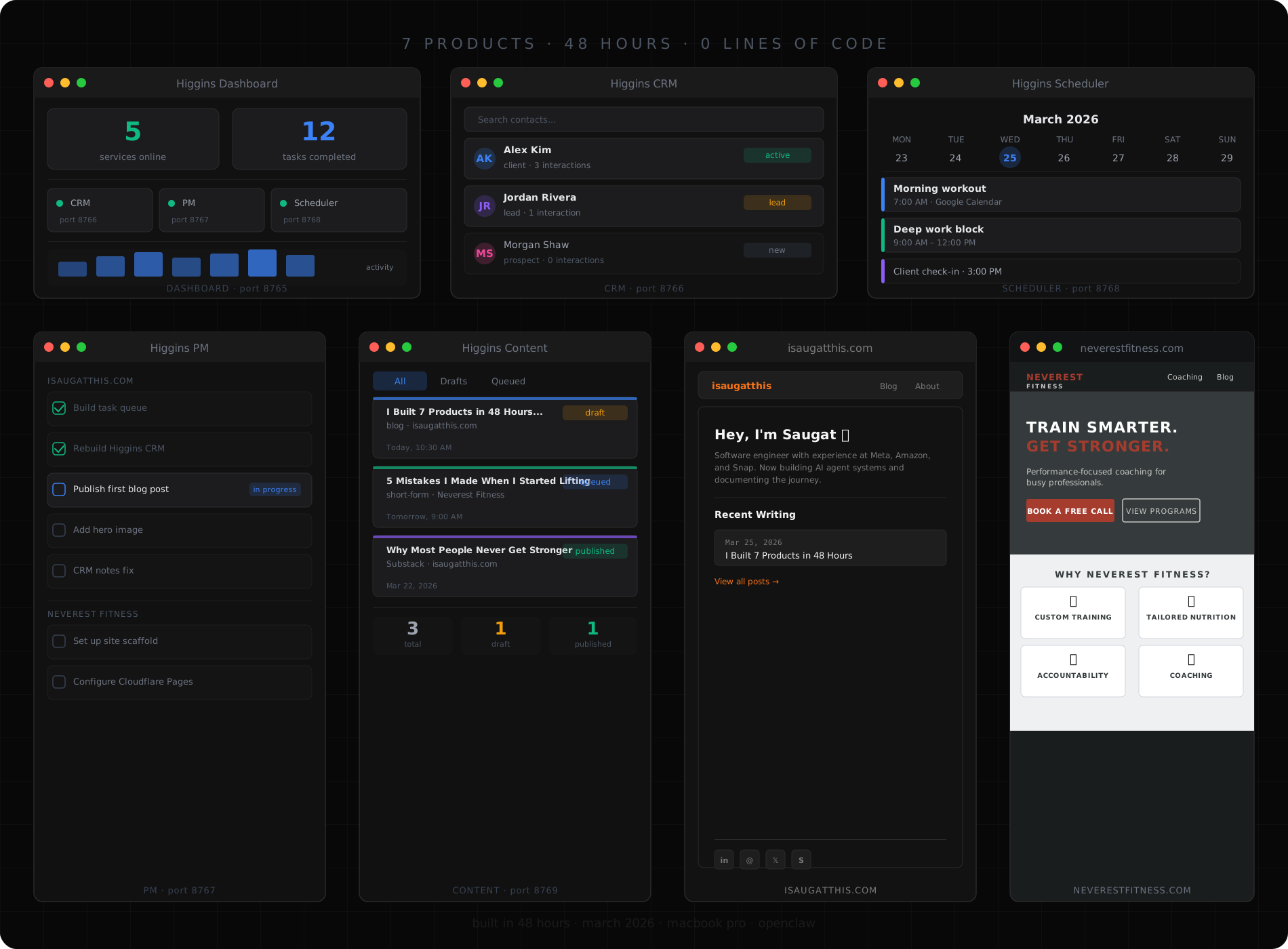
By the end of the weekend, seven projects were running:
- Higgins Dashboard — a live aggregator that pulls status from every service in my stack and auto-refreshes every 15 seconds
- Higgins CRM — full contact management with interaction logging, rich text notes, tag chips, client records, dark theme
- Higgins PM — a project management tool with tasks, milestones, dependencies, and toggle states
- Higgins Scheduler — a multi-calendar system with real Google OAuth2 integration and a background scheduling engine
- Higgins Content — a content pipeline for drafts and publishing, wired to my websites
- isaugatthis.com — this site, deployed on Cloudflare Pages, connected to a publish endpoint
- Neverest Fitness — the scaffolding for my fitness coaching brand’s website, same stack
These aren’t toy apps. They’re running on my machine right now, talking to each other through an orchestration layer I also built that weekend. And I didn’t touch a single line of code to build any of it.
How It Actually Worked
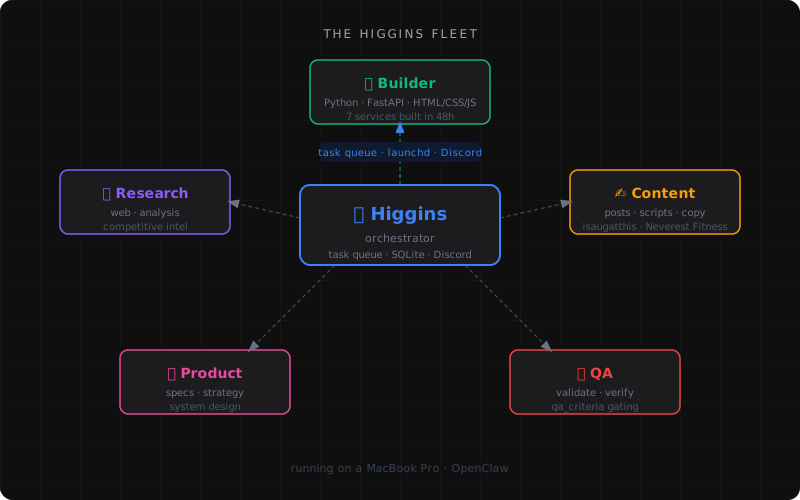
The AI agent I built for this — I call it Builder — handles all the implementation: Python backends, SQLite schemas, FastAPI routes, frontend HTML/CSS/JS, shell scripts, system configs. You describe what you want, review what comes back, iterate, and move on.
What that leaves for me is the part that always mattered — knowing what to build and how it should fit together. Things like catching when something was structurally wrong before it got baked in, deciding how the services should communicate, figuring out what was worth building now versus later. Builder is fast and capable, but it doesn’t have opinions about what matters. That’s still entirely on me.
The actual development felt more like a series of design reviews than software engineering. I spent more time thinking than I did typing.
What Didn’t Go Smoothly
I want to be honest about this, because the 48 hours weren’t frictionless.
Getting the fleet coordination right was probably the hardest part. I have a fleet of specialized agents — Builder for code, Content for writing, Research for analysis, Product for specs, QA for validation — and they all need to communicate through a shared task queue. We built that queue from scratch on SQLite with shell scripts, launchd for process management, and Discord webhooks for notifications. Getting agents to reliably pick up tasks, execute without conflicting, handle failures gracefully, and report back was genuinely tricky. There were stalled agents, processes that got killed mid-task, lock contention issues.
The task coordination system went through several iterations just that weekend. The first version used JSON files on disk, which fell apart almost immediately under concurrent access. We rebuilt it as a proper SQLite-backed queue with dependency tracking, QA criteria gates, and a watchdog process that recovers stuck tasks. That infrastructure is what made the rest of the builds possible — without it, the fleet would just be a handful of capable agents with no reliable way to work together.
The individual apps also had rough edges. Bugs I’ve been fixing since. Features that got scaffolded but not finished. I’d put the overall quality at about 80-90% of my vision across all seven projects — which is an honest number, not a hedge. Some things weren’t done, and some of what was “done” needed cleanup.
But in that same 48 hours, the traditional approach would have gotten me one app, maybe two if I was moving fast. The delta isn’t incremental. It’s a fundamentally different output for one person working alone.
What This Changed for Me
The bottleneck in software development has never really been writing code. It’s always been knowing what to build, how the pieces connect, and what to prioritize. AI didn’t change that — it just cleared away everything around it.
I spent that weekend doing the parts I actually find interesting: designing systems, making product decisions, debugging architectural problems. The cognitive overhead of actually implementing things just wasn’t there.
I’m continuing to build out this infrastructure and document what I’m learning along the way. There’s more to come — more on how the fleet works, what breaks, and what keeps surprising me.